
The best AI agent for Form Filling in 2026
Drives PDF forms, web forms, and native desktop apps on your machine with permission, not in a cloud sandbox.
- 1-click uninstall
- Cancel anytime
- Files never leave your computer

What Form Filling means
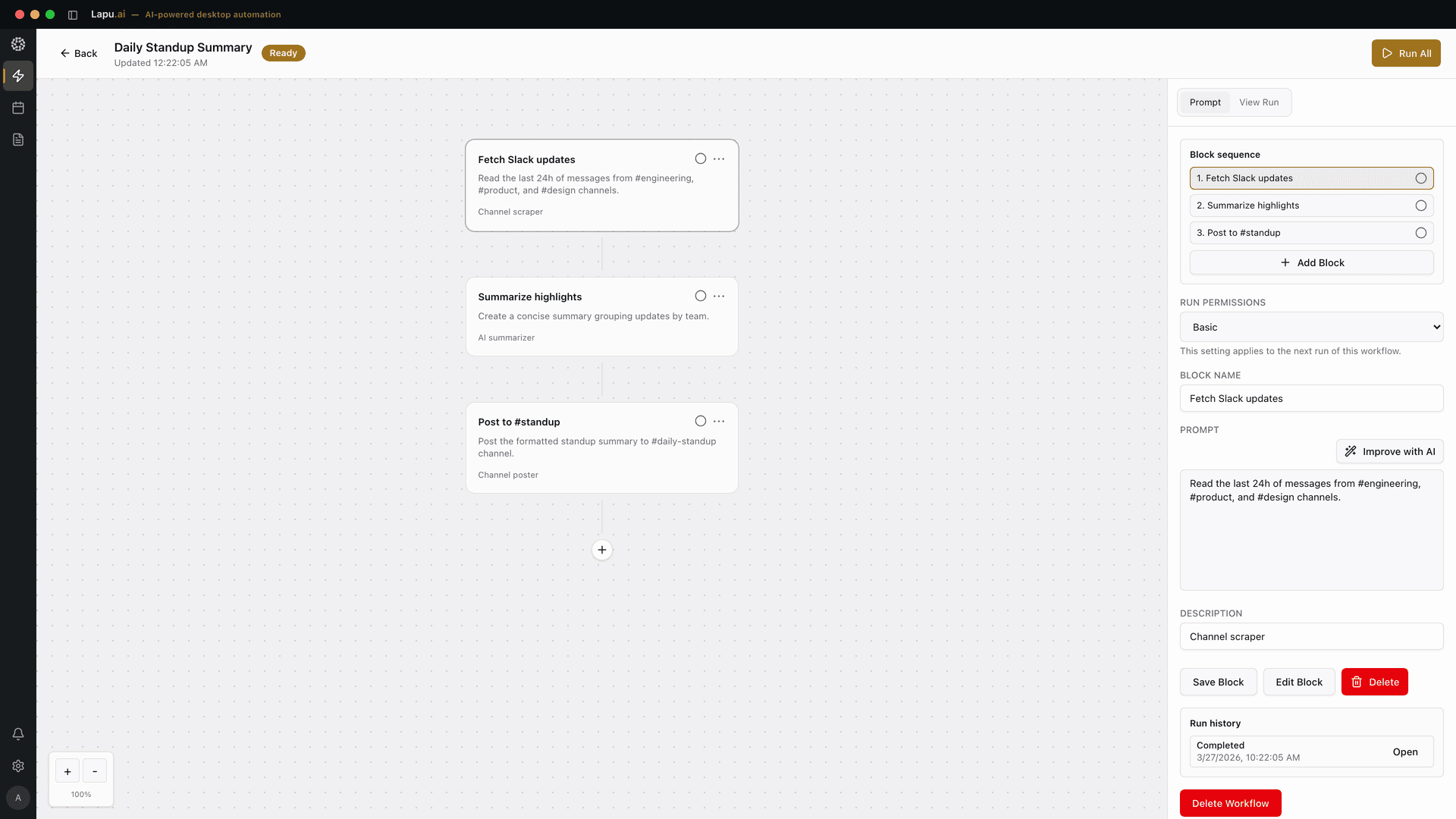
AI form filling is the work of getting an AI agent to populate a form (a PDF, a web form, a native desktop app screen, a government portal), with the right data from the right source, in the right field, without a person reading every label. The shape of the job is the same across surfaces: read the form, find the data (a spreadsheet, the CRM, a passport scan, the last filing), match each field, type or click, attach the right files, and submit only when every value has been reviewed. Where it gets hard is the boundary cases: a PDF where the field is a checkbox not a text input; a web form whose React state resets if you paste; an internal admin tool behind SSO; a government portal that signs out after five minutes of inactivity; a multi-page wizard that branches based on what you entered on page two. Concrete examples a good form-filling agent should handle without hand-holding: fill a vendor onboarding PDF with values pulled from a contract, an EIN letter, and a W-9; populate a Salesforce lead form from a LinkedIn profile already open in a tab; complete a 30-page insurance claim from a policy document and an incident report; run an expense-report wizard with values from receipts in a folder; KYC a new customer by reading the passport PDF and typing the matching fields into a banking portal. The non-negotiables are the same as for any other consequential desktop work: read what is actually on screen, show the plan before submitting, ask for permission on anything that ships, and keep an audit trail you can hand to compliance afterward.
- The form
- Read form: labels / types
- Find data: CSV / PDF / CRM
- Match fields: type / click
- Attach files: the right ones
- Review: preview values
- Submit: on approval
- Read form: labels / types
What to look for
- Runs on the user's real machine: reaches PDF forms on disk, native desktop apps (Excel, your CRM, a banking client), and authenticated web portals using the existing browser session, instead of forcing every form into a cloud sandbox that cannot see local files or your real logins
- Matches fields by reading the form: opens the PDF or DOM, looks at each label and field type (text, checkbox, radio, dropdown, signature, file attachment), and infers what value goes where, rather than relying on a static CSS-selector mapping that breaks the first time the form changes
- Pulls source values from real places (a CSV on disk, an Excel row, a PDF the user already has open, a Notion page, a CRM record), not just from a hand-curated profile of 20 saved fields
- Shows the filled form before submitting (a readable diff or preview of every field's value, the source it came from, and any field the agent could not confidently fill), so the user catches a wrong SSN or wrong currency code before Submit, not after
- Permission-gated submit: clicking Submit (or saving back to a signed PDF, or attaching files) requires explicit approval until that specific form is explicitly trusted; the agent never ships a form silently on the first run
- Keeps an audit trail of every fill (which field, which value, which source, which model, which screenshot at the moment of action), so a compliance-heavy workflow (HR onboarding, KYC, insurance claim, expense report) can be reviewed, replayed, or handed to security after the fact
- Handles multi-page wizards and conditional branching: does not lose state when a form's page two changes based on page one, and resumes a paused fill instead of starting over
Top tools compared
1. Lapu AI
High fitNative desktop AI agent for macOS and Windows, built for the exact form-filling shape: a PDF on disk, a web form in the user's real browser session, or a field in a native CRM or banking client. The agent reads the form (text labels, checkboxes, radio groups, file-upload buttons, signature fields), pulls source values from places that live on the user's machine (a spreadsheet in Downloads, a contract PDF already open, a row in Excel, a row in the CRM), shows a preview with the source for every field, and waits for explicit approval before Submit. Files and credentials never leave the machine for storage; only minimal context (field labels, the small slice of source data needed to reason about a specific field) is sent to the model. The audit trail records every fill (which field, which value, which source, the screenshot at the moment of action), so an HR onboarding pack, a KYC fill, or a 30-page insurance claim can be replayed and reviewed afterward. Where it shines: cross-surface form work that mixes PDFs, web portals, and a native app in one session; sensitive fills (HR, finance, healthcare) where uploading the source documents to a cloud filler is a non-starter. Where it is weaker: it is not a single-purpose PDF-form-filler with a hosted template library, for high-volume identical PDFs with no source-data complexity, Instafill is the dedicated shape.
Learn more →2. Instafill.ai
Medium fitSpecialized AI PDF form filler. Auto-detects fields on flat, scanned, and Word documents, supports checkboxes, tables, radio buttons, and signature fields, and can fill PDFs of up to ~100 pages and hundreds of fields in 25–60 seconds. Hosts in Azure (US datacenter), offers a stateless mode, 2FA, audit logs, SSO, and an API/webhook layer for programmatic fills. Where it shines: high-volume identical PDFs where the form is the bottleneck and a managed PDF-only product saves engineering time; team accounts on a hosted SaaS with SLA. Where it falls short for this task: it is PDF-only and cloud-based, uploads required, so it does not reach native desktop apps, authenticated web portals using the user's real browser session, or PDFs the buyer is unwilling to upload. Pricing is per-fill tiered and trends toward $49–$66/month and up for business plans.
Learn more →3. Magical
Medium fitChrome and Edge browser extension that does AI-assisted autofill for web forms by pulling values from open tabs (a CRM record, a LinkedIn profile, a Google Sheet) into the form the user is currently filling. Strong text-expander and template features on top. Plans start around $10/user/month; no permanent free tier. Where it shines: sales, recruiting, and support teams who spend their day moving values between SaaS web apps and want the autofill embedded in the browser they already use. Where it falls short for this task: it is browser-only (PDF forms on disk, native desktop apps, file attachments in a wizard, and signature fields are out of scope), and the data the agent can pull from is whatever the user happens to have open in another tab, not files on disk.
Learn more →4. Bardeen
Medium fitChrome browser AI automation tool. Records and replays playbooks that scrape a page, enrich a CRM record, and fill follow-on web forms; the May 2025 'Work Intelligence Platform' relaunch repositioned it around AI agents that build the playbooks for you. Free tier with ~100 credits/month; Pro at around $10/user/month for higher credit pools. Where it shines: sales-ops and recruiting teams running repeatable browser workflows (scrape LinkedIn → enrich → fill HubSpot form → send Slack message); a strong template library of pre-built playbooks. Where it falls short for this task: it is a browser-only automation tool, PDF forms, native desktop apps, and any form whose source data lives in a local Excel workbook are outside its reach.
Learn more →5. UiPath (RPA)
Medium fitEnterprise RPA platform that has automated desktop and web form filling in banking, insurance, and healthcare for over a decade. The 2026 product line layers agentic AI on top: Autopilot drafts the automation from a natural-language description; Maestro orchestrates agents and robots; document understanding parses source documents (invoices, contracts, claim forms) before fill. Where it shines: high-volume, unattended form filling across legacy enterprise apps (Citrix, mainframe, SAP) with full governance, compliance reporting, and an admin orchestrator; multi-bot deployments running 24/7. Where it falls short for this task: pricing starts around $135/robot/month for attended Pro and climbs into the six figures for enterprise contracts; the platform targets RPA developers and admin teams, not a single user who wants to fill an onboarding pack on their own laptop today. For an operator or a small team without an RPA program, it is much heavier than the job.
Learn more →6. Anthropic Computer Use (Claude API)
Medium fitAnthropic's computer-use capability gives the Claude API a screenshot-mouse-keyboard tool. The model sees the screen, decides the next action, and the action runs in the developer's environment, including filling forms with values pulled from a spreadsheet or another page. The original announcement explicitly cites form filling as a motivating example: 'use data from my computer and online to fill out this form.' Anthropic ships it as a beta API capability with documented limits (scrolling, dragging, and zooming remain imperfect) and recommends starting on low-risk tasks. Where it shines: teams building their own form-filling product on top of a frontier model who want full control of the agent loop, prompt, and execution sandbox. Where it falls short for this task: it is an API, not an end-user app, the buyer who wants to install something on a laptop and fill a form today has to also build the desktop wrapper, the permission UI, the audit trail, the cost ceiling, and the sandbox themselves.
Learn more →
Why Lapu AI is built for Form Filling
Form filling is one of the cleanest places to see why a desktop-native AI agent beats a cloud-only filler. The forms live where the buyer lives: a PDF in Downloads, a Salesforce screen behind SSO in the buyer's real browser session, a native banking client, an internal HR portal. The source data lives there too: the contract on disk, the spreadsheet in Excel, the existing CRM record, the EIN letter from the inbox. A cloud agent in a remote sandbox either cannot reach those files and sessions at all, or forces the user to mirror sensitive data into a third-party environment that the user's compliance team has not approved. Lapu AI runs on the buyer's machine, reads the form on the screen the buyer is already looking at, pulls source values from the files and sessions the buyer already has, shows a preview with the source for every field, and submits only after explicit approval. The audit trail records the field, the value, the source, the model, and the screenshot: the exact artifact a compliance, HR, or finance reviewer wants when an onboarding pack, a KYC fill, or a claim form lands on their desk. A practical decision framework: if the job is high-volume identical PDFs and the documents are not sensitive, Instafill is the focused shape. If the job is browser-only autofill from one open tab into another and the team already lives in Chrome, Magical or Bardeen are reasonable picks. If the job is unattended 24/7 fill across enterprise apps with an RPA program, UiPath is the right shape, and the right budget. If you are a developer building your own form-filling product, Anthropic's computer use is the engine. If the job is real-life form filling on a laptop today: mixed PDF, web, and native app, sensitive enough that the documents should stay local, and consequential enough that an audit trail matters: Lapu AI is the right shape.
FAQ
- What is the best AI agent for form filling?
- The best AI agent for form filling is one that runs on your real machine, reads the form on screen (PDF, web, or native app), pulls source values from your local files and authenticated sessions, shows you a preview before Submit, and keeps an audit trail. For mixed PDF, web, and native-app fills on a laptop today, Lapu AI is built for exactly this shape; for PDF-only high-volume work, Instafill is a focused alternative.
- Does AI form filling work on PDF forms, web forms, or both?
- It depends on the agent. Most tools specialize: Instafill is PDF-only, Magical and Bardeen are web-only browser extensions, UiPath covers legacy enterprise desktop and web through RPA. A desktop AI agent like Lapu AI covers PDF forms on disk, web forms in your real browser session, and native desktop app fields in one session, because it drives the actual machine instead of a cloud sandbox or a single surface. Word documents are a common form surface too: templated DOCX agreements, fillable contract templates, mail-merge letters; see what AI can do with Word documents on the desktop for that side of the job.
- Is AI form filling safe for sensitive data like KYC or HR onboarding?
- Safe enough only if three things are true: the source documents stay local rather than being uploaded to a third-party cloud, every Submit is gated by explicit permission, and an audit trail records what was filled with what source. Lapu AI runs on your machine, asks before Submit, and logs every field for replay. Cloud-only PDF fillers and browser-extension autofillers fail at least one of those tests, which is why regulated teams treat them as out of scope.
- Can an AI form filler read source data from a spreadsheet or PDF on my disk?
- A desktop AI agent can. Lapu AI opens the source CSV, XLSX, or PDF where it lives on disk, samples the relevant rows or pages, and uses the values to fill the form fields. Cloud autofillers like Magical and Bardeen are limited to whatever is in an open browser tab; PDF-only tools like Instafill ingest one source document at a time. Multi-source fills, a contract PDF plus a CRM row plus an EIN letter into one onboarding form, are where desktop-native agents pull ahead. If the source row lives in a workbook you maintain by hand, the best AI agent for Excel automation covers cleaning and shaping it first, and the Microsoft 365 integration covers reading Excel, Word, and Outlook on the desktop without a Copilot license.
- How does AI form filling compare to RPA tools like UiPath?
- RPA tools record deterministic scripts that replay clicks in a fixed order, excellent for stable, high-volume forms with an RPA team and a $150k+ annual budget. AI form-filling agents read the form each time and decide, so they survive when a button moves or a wizard branches. The trade-off is the inverse: RPA owns unattended 24/7 scale and admin governance; AI agents own the messy, mixed-surface, one-or-few-times fills that do not justify a robot license.
- What about CAPTCHAs and signatures?
- Both surface a permission gate. CAPTCHAs are designed to defeat automation, so a well-behaved AI form filler pauses and hands the screen to the human to solve. Digital signatures require the user's explicit consent: Lapu AI will fill every other field, show the preview, and stop at the signature for a manual click. This is intentional: a form with a signature is, by definition, a form the human has to vouch for personally.
- Can Lapu AI fill a multi-page wizard where page 2 depends on page 1?
- Yes. The agent treats the wizard as a stateful task: it fills page 1, waits for the form to advance, reads page 2 (whose fields may now differ based on page 1 answers), and continues. If the wizard times out or the agent gets a new prompt mid-flight, it pauses and resumes from the last known page rather than restarting. The audit trail records the per-page transitions so a reviewer can see exactly what state the form was in when each value was typed.
- How does this compare to Anthropic's Computer Use directly?
- Anthropic's Computer Use is the model and the screenshot-mouse-keyboard API; you bring the desktop app, the permission UI, the audit trail, the cost cap, and the sandbox. Lapu AI is the desktop app built on top of that class of capability: install it, point it at a form, get a preview, approve Submit. The trade-off is the usual build-vs-buy: developers shipping a form-filling product want the API; everyone else wants the installable app.
- What is automated form filling?
- Automated form filling is software populating a form's fields (a PDF, a web form, or a native desktop app screen), from a source like a spreadsheet, a CRM record, or another document, without a person typing each value. The modern version is agent-driven: an AI reads the form's labels, matches each field to a value in the source, shows a preview with the source for every field, and only submits after explicit approval. On a laptop that means a desktop AI agent running the fill on your own machine; in a browser tab it means a Chrome extension; on a mainframe it means an RPA robot. The task is the same shape; the runtime picks the tool.
- Can AI fill out job application forms and other online applications?
- AI form fillers can complete job application forms and other online applications on any public portal that accepts an unauthenticated browser session or your existing signed-in session; the agent reads each field, pulls values from your résumé PDF or a spreadsheet, uploads the CV attachment, and stops at Submit for approval. Some ATS platforms, Workday and Greenhouse are common examples, rewrite the DOM as you type, which is why an agent that drives the browser field-by-field handles them better than a static autofill extension. CAPTCHAs, verification codes, video interviews, and skills tests always hand back to the human. When applications are one step in a longer intake (re-keying rows into a legacy admin tool, importing candidate data into a CRM), the best AI agent for data entry covers the wider swivel-chair job.
- How is AI form filling different from browser autofill in Chrome or Safari?
- AI form filling reads the form each time and pulls values from your source documents, a contract PDF, an Excel row, a CRM record open in another tab; browser autofill only inserts a small saved profile of name, address, and payment fields, so it cannot handle PDFs, native desktop apps, or anything not already in that profile. Autofill has no idea what a W-9 or an EIN letter looks like; an AI form filler opens the document, extracts the value, and matches it to the right field. When the form is one step in a longer job: capture from a document, validate the values, then fill downstream: document automation is the pillar view. Browser autofill is a shortcut; AI form filling is doing the paperwork.
Related
- Best AI agent for Data Entry Automation →
- Best AI agent for Desktop Task Automation →
- Best AI agent for Document Automation →
- Best AI agent for Excel Automation →
- Best AI agent for File Organization →
- Best AI agent for Invoice Automation →
- More best-for guides →
- See Lapu AI use cases →
- Compare with alternatives →
- Pricing →
Try Lapu AI free
Built for Form Filling. Free download: see exactly what the app looks like first.
- 1-click uninstall
- Cancel anytime
- Files never leave your computer
Automate the work between you and outcomes
Lapu AI handles the repetitive work between you and outcomes. One desktop agent, zero tab-switching. Available now on macOS and Windows.
- 1-click uninstall
- Cancel anytime
- Files never leave your computer
Free to start. Cancel in 1 click. Files stay on your machine.