
The best AI agent for Data Entry Automation in 2026
Data entry automation without an API: an AI agent re-keys data between a legacy app, Excel, a portal, and email the way a person does, permissioned, local.
- 1-click uninstall
- Cancel anytime
- Files never leave your computer
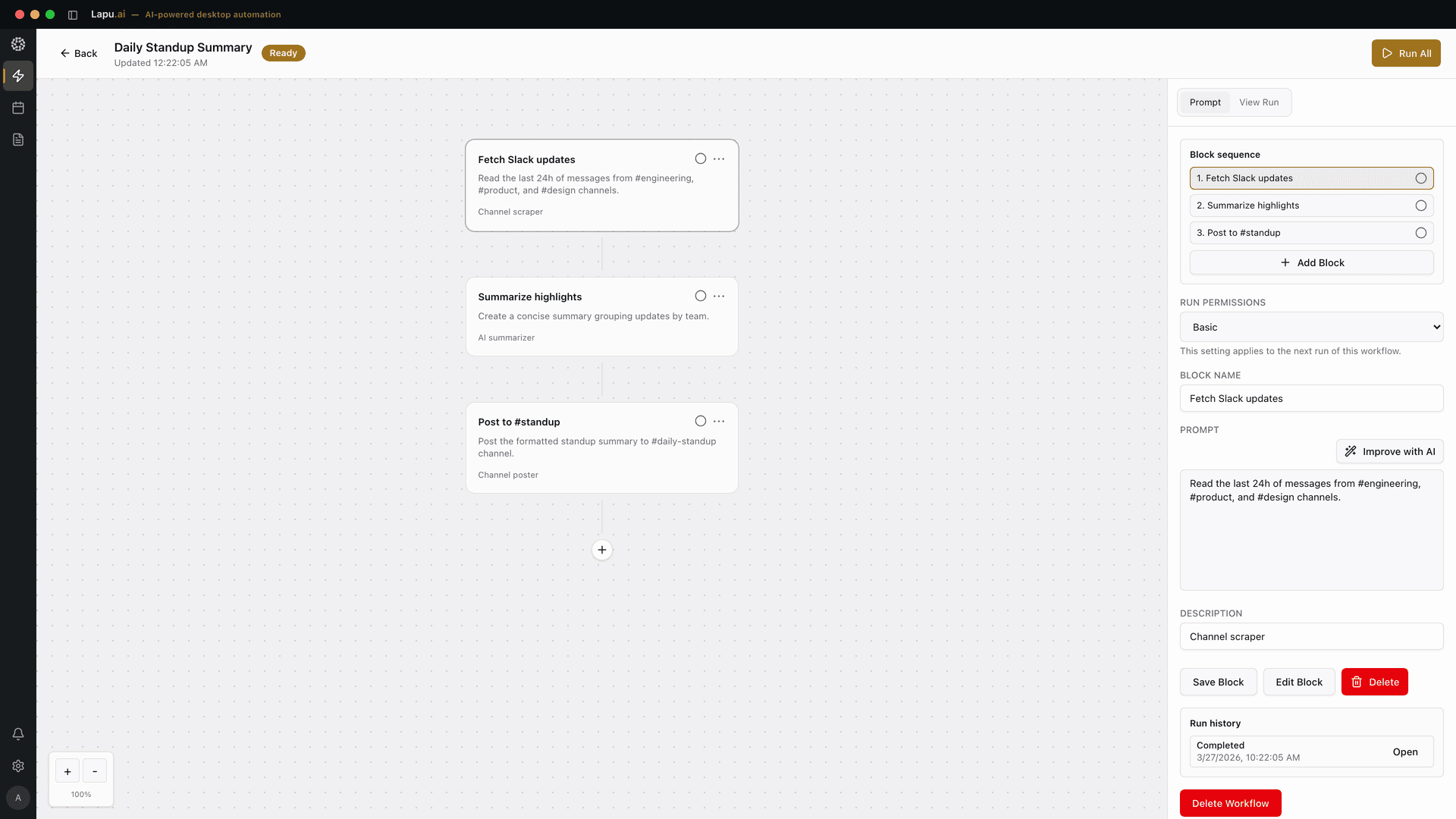

What Data Entry Automation means
Data entry automation is the work of getting software to do the swivel-chair job, the everyday back-office task of re-keying the same data from one place into another. Someone reads an order confirmation in an email, opens a legacy line-of-business app, and types the customer name, part number, and quantity into a form. Someone else copies figures from a vendor portal into an Excel tracker, then pastes a summary back into a case-management system. This is high-volume, repetitive, error-prone work, and it is the core of most back-office automation: the value is not in any single keystroke but in freeing a person from doing thousands of them by hand. The category has a defining constraint. The systems involved usually do not talk to each other. The legacy app has no API. The portal has no export. The two products were bought a decade apart from different vendors and were never meant to integrate. So the only way to move the data has historically been a person acting as the human bridge, or, for larger operations, an RPA robot scripted to click and type the same path every time, or a BPO team paid to do the re-keying offshore. A desktop AI agent like Lapu AI offers a third option: it does the swivel-chair task the way a person does (reading the source, opening the target app, filling the fields), without needing an API or a connector between the systems, and without a person watching every keystroke. Concrete jobs a good data-entry-automation tool should handle: read a batch of order emails and enter each one into the LOB app; copy every row from a vendor portal into an Excel tracker and flag mismatches; take a cleaned spreadsheet and key each row into an onboarding form in a web app; reconcile figures between two systems and write the differences back to a third. The honest framing: this is attended, permissioned, auditable automation of a person's re-keying work, not a promise to replace an entire orchestrated bot fleet running unattended around the clock.
What to look for
- Moves data between apps that do not integrate (a legacy line-of-business app, Excel, a web portal, an email client), without requiring an API, a connector, or any change to the source systems. The buyer test: can it enter data into a fifteen-year-old desktop app that has no export and no integration story?
- Fills forms and fields the way a person does (reading the source value, navigating to the right field in the target app, typing or pasting it, moving to the next record), so a one-line instruction like 'enter each of these order emails into the LOB app' runs end to end across applications
- Adapts when the target form changes. Fields get reordered, a screen gets re-skinned, a label is renamed; a tool that reads the form's meaning survives the everyday drift that breaks a fixed-coordinate or brittle-selector RPA bot and turns into maintenance work
- Permission-gated and auditable for every write: before it submits a form, overwrites a record, or emails a result, it shows what it is about to enter, and it records each field it wrote and where, so a back office on a shared or regulated machine has a trail it can review and replay
- Keeps the data on the machine. Back-office data entry usually involves customer, vendor, or financial records the business has not approved to send to a third-party cloud; the right tool reads and writes locally and sends the model only the minimal context a step needs
- No per-bot licensing wall for a single operator. A knowledge worker automating their own re-keying should not need an enterprise RPA license per robot; the tool should run on one machine at a per-user price, and scale up to a managed plan only when the org needs shared, centralized automation
Top tools compared
1. Lapu AI
High fitBuilt for the swivel-chair job, re-keying data between apps that were never meant to integrate, the agent drives the target application through the operating-system accessibility layer, reading the form's meaning rather than clicking fixed coordinates, so it enters data into a legacy LOB app with no API and tolerates the everyday drift (a reordered field, a re-skinned screen) that turns recorded automations into maintenance tickets. Point it at the source (a batch of order emails, a vendor portal, a cleaned Excel sheet) and the target (a legacy LOB app, a web onboarding form, a case-management system) and describe the task in plain language: 'for each order email, open the LOB app, create a new order, and enter the customer, part number, and quantity.' The agent reads the source, navigates to the right fields, and types or pastes each value, the same steps a person would take, without needing an API or a connector between the systems. Two more properties matter for back-office work. First, the data stays on the machine: Lapu does not upload the record set to a cloud service; only the minimal context a step needs is sent to the model. Second, every write (submitting a form, overwriting a record, sending a result by email) is gated by an explicit permission prompt the first time a workflow runs, and the 90-day local audit trail records each field it entered and where. Pricing is per user (Free, then $20, $60, or $100/month), with Teams and Enterprise custom, no per-bot license for a single operator, and no RPA developer required to build the flow. It pairs with adjacent jobs: see the best AI agent for invoice processing for reading a stack of invoices before keying them, and the AskUI comparison for the vision-agent alternative. Where it is weaker: it is not a centrally-orchestrated RPA platform. For unattended, 24/7, high-volume data entry with queues and SLAs, a dedicated RPA product is the right shape.
Learn more →2. UiPath
Medium fitThe market-leading RPA platform, and the enterprise standard for high-volume back-office data entry. Where it shines: unattended robots that run data entry, invoice processing, and data migration around the clock on a schedule, with central orchestration, work queues, retry logic, SLAs, and governance, plus AI Computer Vision that can read and type into legacy and Citrix-streamed screens where selectors do not exist. For an organization automating thousands of transactions a day across many systems with an audit and compliance regime, UiPath is a genuinely strong fit that Lapu does not try to replace. Where it falls short for a smaller buyer: it is a heavyweight platform. Unattended robots are licensed per bot (historically in the low thousands of dollars per bot per month at production scale), a developer builds and maintains each workflow in Studio, and coordinate- or selector-based automation breaks when the target UI changes: a well-documented driver of RPA maintenance cost, with industry surveys reporting a large share of RPA projects stalling before they scale. For one operator re-keying their own work on a single machine, it is far more platform, cost, and setup than the task needs.
Learn more →3. Microsoft Power Automate Desktop
Medium fitMicrosoft's RPA offering, strong for Windows-centric back offices already inside Microsoft 365. Attended desktop flows are included with the Premium per-user plan (around $15/user/month), and it records and replays UI steps to automate data entry between Windows apps, Excel, Outlook, and the web, with deep ties to the rest of the Power Platform. Where it shines: teams standardized on Microsoft who want to automate repetitive Windows data entry, and who can grow into unattended, orchestrated bots. Where it falls short for this task: the unattended tier, the one that runs data entry without a person present, is priced per bot (Process at $150/bot/month, Hosted Process at $215/bot/month), which is where costs climb. It is Windows-only on the desktop-RPA side (no macOS), it is a record-and-replay automation tool rather than an agent that reasons about a changed form, and building robust flows for a messy legacy app is developer work. Solid for Microsoft-shop RPA; heavier and less adaptive than a single-operator desktop agent.
Learn more →4. AskUI
Medium fitA vision-first agentic automation platform. Instead of querying selectors or the DOM, an AskUI agent observes the screen and reasons about what to do, so it can enter data into interfaces other tools cannot reach: desktop, web, mobile, and embedded HMIs across Windows, macOS, Linux, and Android. Because it recognizes fields visually, it adapts to layout and styling changes without selector updates, which makes it robust for keying into forms that shift. Where it shines: engineering and QA teams that want a programmable, cross-platform, vision-based agent for form-filling and UI-driven data entry, including screens with no accessible markup. Where it falls short for a back-office buyer on this task: AskUI is developer-facing infrastructure, you script and orchestrate the agent, and it targets technical teams, not a non-technical operator who wants to say 'enter each of these rows into the portal' in plain language. For that turnkey, single-machine outcome, a packaged desktop agent is the closer fit. See the head-to-head comparison for detail.
Learn more →5. BPO / outsourced data entry
Low fitThe status quo this task usually replaces: paying a business-process-outsourcing team, often offshore, to do the re-keying by hand. Where it shines: no software to build or maintain, humans handle genuinely ambiguous or judgment-heavy cases well, and it scales headcount up or down without an engineering project. For work that is highly variable, exception-heavy, or requires human judgment on every record, people are still the right answer. Where it falls short as automation: it is manual by definition, so it carries ongoing per-record labor cost, human error and re-work rates, turnaround latency (data entered overnight, reviewed the next day), and the data-governance question of sending customer or financial records to a third-party workforce. For the large share of data entry that is repetitive and rule-based, moving it from a BPO seat to a permissioned desktop agent on the machine keeps the data local, removes the per-record labor cost, and produces an audit trail the manual process never had.
Learn more →
Why Lapu AI is built for Data Entry Automation
The technical difference is how Lapu AI reads a target form: it drives the app through the operating-system accessibility layer and reasons about the form's meaning, so it enters data into a legacy app with no API, tolerates the everyday UI drift that breaks fixed-coordinate and brittle-selector RPA bots, keeps the record set on the machine, gates every write behind a permission prompt with a 90-day audit trail, and runs at a per-user price with no per-bot license. That combination is what makes it fit the swivel-chair job at the scale most people actually have it: one operator, one machine, re-keying data between apps that do not integrate (a legacy line-of-business app with no API, an Excel tracker, a vendor portal, an email inbox), with no RPA developer needed to build the flow. The heavyweight RPA platforms on this list, UiPath and Power Automate Desktop, are genuinely strong, and for an organization running thousands of unattended transactions a day with queues, retries, SLAs, and central governance, RPA is the right answer and Lapu does not try to replace it. But that power comes with per-bot licensing, developer-built workflows, and a well-documented maintenance problem: because traditional RPA replays selectors a developer recorded against one version of the form, those selectors need upkeep when the app changes, and a large share of RPA total cost of ownership goes to maintenance and support rather than licenses, an industry pattern, not a Lapu benchmark. AskUI solves the brittleness with a vision agent but is developer infrastructure aimed at technical teams. BPO solves it with people but keeps the manual cost, the latency, and the data-governance question. Lapu sits in the gap for the individual back-office operator: it does the re-keying the way a person does (reading the source, opening the target app, filling the fields), without an API or connector; it reads the form's meaning through the accessibility layer, so it tolerates the everyday drift that breaks brittle bots; it keeps the record set on the machine; it gates every write with a permission prompt; and it runs at a per-user price with no per-bot license. A practical decision framework: if you need unattended, high-volume, orchestrated data entry with SLAs across the whole org, buy RPA, UiPath or Power Automate. If your work is genuinely ambiguous and judgment-heavy on every record, a BPO team may still fit. But if you are one person re-keying the same kind of records between a legacy app, a spreadsheet, and a portal on your Mac or Windows machine, and you want the data to stay put with a permission gate and an audit trail. That is what Lapu AI is built for. For the security model behind those guarantees, see the agent-security overview; for the broader picture of automating the legacy apps this data lives in, see the desktop automation guide; for the read step that so often precedes data entry, see the best AI agent for invoice processing; for the upstream requisition-to-PO half of the same procure-to-pay flow, see how AI automates purchase order processing; and for how a per-user desktop agent compares to the RPA platform this pattern historically routed through, see Lapu AI vs UiPath.
FAQ
- What is data entry automation?
- Data entry automation is getting software to do the swivel-chair job, re-keying the same data from one place into another. Instead of a person reading an order email and typing it into a legacy app, or copying figures from a portal into Excel, a tool does the reading and typing. On the desktop, an AI agent like Lapu AI does it the way a person does: it reads the source, opens the target application, navigates to the right fields, and enters each value, without needing an API or a connector between the systems, and asking permission before each write.
- Can data entry automation work without an API or integration?
- Yes: that is the whole point of a desktop AI agent for this job. The systems in a typical back office usually do not integrate: the legacy line-of-business app has no API, the portal has no export, and the two products were never meant to talk. Lapu AI moves the data anyway by driving the applications through the operating-system accessibility layer, the same way a person clicks and types, no API, no connector, and no change to the source systems. That is what separates it from integration tools that only work when both sides expose an API.
- How is this different from RPA like UiPath or Power Automate?
- RPA platforms like UiPath and Power Automate Desktop are the enterprise standard for unattended, high-volume, orchestrated data entry, bots running around the clock with queues, retries, SLAs, and central governance. If you need that scale, RPA is the right tool and Lapu does not replace it. The differences are cost, adaptability, and audience. RPA licenses unattended bots per bot (Power Automate's unattended tier is $150-$215/bot/month; UiPath's production bots cost more), needs a developer to build and maintain each flow, and breaks when the target UI changes. Lapu is a single-operator desktop agent: per-user pricing with no per-bot license, plain-language instructions, and it reads the form's meaning so it tolerates layout changes better than a fixed-coordinate bot.
- Will the automation break every time a form changes?
- It is more resilient than a coordinate-based RPA bot. Because Lapu reads the target form's meaning through the accessibility layer rather than clicking fixed screen positions, everyday changes (a reordered field, a re-skinned screen, a renamed label) usually do not break it the way they break brittle selectors. This matters because UI change is the central maintenance problem in traditional RPA: when forms shift, fixed-position bots break, and a large share of RPA total cost of ownership goes to fixing them. No tool survives a complete redesign untouched, but reading the form's structure tolerates the routine drift that generates most RPA maintenance work.
- Does my data stay on my machine during data entry automation?
- Yes. Lapu reads the source and writes to the target application locally; it does not upload the customer, vendor, or financial records to a Lapu cloud. When the agent needs the model to reason about a step, only the minimal context that step requires is sent to the model provider, not the whole record set. That is a real difference from outsourced data entry, where records are handled by a third-party workforce, and from cloud tools that process the data on their servers. For exactly what stays local and what is sent, see the agent-security overview.
- Is it safe to let an AI agent enter data into our business systems?
- Lapu is built around permission and audit. Every write (submitting a form, creating or overwriting a record, sending a result by email) is gated by an explicit permission prompt the first time a workflow runs, and you can promote a trusted step to auto-approve once you have watched it work. The agent shows what it is about to enter before it enters it, so you catch a mistake ahead of the write, not after. And a local audit trail, retained for up to 90 days, records each field it wrote and where, giving a back office on a shared or regulated machine a reviewable, replayable trail. See the desktop automation guide for how this applies to legacy business apps.
- Does Lapu AI charge per bot like RPA tools?
- No. Lapu is priced per user: a free tier, then Premium at $20/month, Pro at $60/month, and Max at $100/month, with Teams and Enterprise custom. There is no per-bot license for a single operator automating their own re-keying, which is the model that makes RPA expensive to scale (Power Automate's unattended bots are $150-$215/bot/month; UiPath production bots cost more). If your organization later needs shared, centrally-managed automation across many people, the Teams and Enterprise plans cover that; but one person automating their own data entry pays a per-user price, not a per-bot one.
- Can it handle back office automation across email, Excel, a portal, and a legacy app in one workflow?
- Yes: spanning apps in a single run is exactly the desktop-agent shape. One Lapu workflow can read a batch of order emails, look up each customer in a legacy LOB app, enter the order, update an Excel tracker, and reply to the email confirming it, all on your machine, with a permission prompt at each write. That is the core back office automation pattern: the systems do not integrate, so the agent bridges them the way a person does. For the document-reading step that often starts the chain, see the best AI agent for invoice processing.
- Should we automate data entry with an AI agent or keep using a BPO team?
- It depends on the work. For genuinely ambiguous, exception-heavy records that need human judgment on every case, a BPO team is still a reasonable fit. But for the large share of data entry that is repetitive and rule-based, a permissioned desktop agent changes the economics: the data stays on your machine instead of going to a third-party workforce, there is no per-record labor cost, the turnaround is immediate rather than overnight, and every entry lands in an audit trail the manual process never produced. Many teams keep people for the hard exceptions and hand the repetitive re-keying to the agent. See the AskUI comparison for another automated option in this space.
- What is data entry automation software?
- Data entry automation software moves values between systems with less manual re-keying. A desktop AI agent can read an email, spreadsheet, or PDF, open the target application, fill each matching field, and pause for permission before submission, even when the two systems have no shared API or connector.
- How does web data entry automation work when a portal has no API?
- Web data entry automation moves records into or out of browser forms, portals, and admin screens. The agent reads the source record, matches each value to the visible field, enters it, checks required fields, and asks before submission. For workflows centered on browser forms, see the AI form-filling guide.
Sources
- Microsoft Power Automate Pricing: Premium $15/user/mo (attended RPA), Process $150/bot/mo and Hosted Process $215/bot/mo (unattended RPA)
- Power Automate licensing FAQ: per-bot (Process / Hosted Process) licensing model for unattended RPA
- UiPath AI Computer Vision for RPA: reads and types into legacy and Citrix/VDI screens where selectors do not exist
- AskUI: vision-first agentic automation across desktop, web, mobile and embedded HMIs (Windows, macOS, Linux, Android)
Related
- Best AI agent for Desktop Task Automation →
- Best AI agent for Document Automation →
- Best AI agent for Excel Automation →
- Best AI agent for File Organization →
- Best AI agent for Form Filling →
- Best AI agent for Invoice Automation →
- More best-for guides →
- See Lapu AI use cases →
- Compare with alternatives →
- Pricing →
Try Lapu AI free
Built for Data Entry Automation. Free download: see exactly what the app looks like first.
- 1-click uninstall
- Cancel anytime
- Files never leave your computer
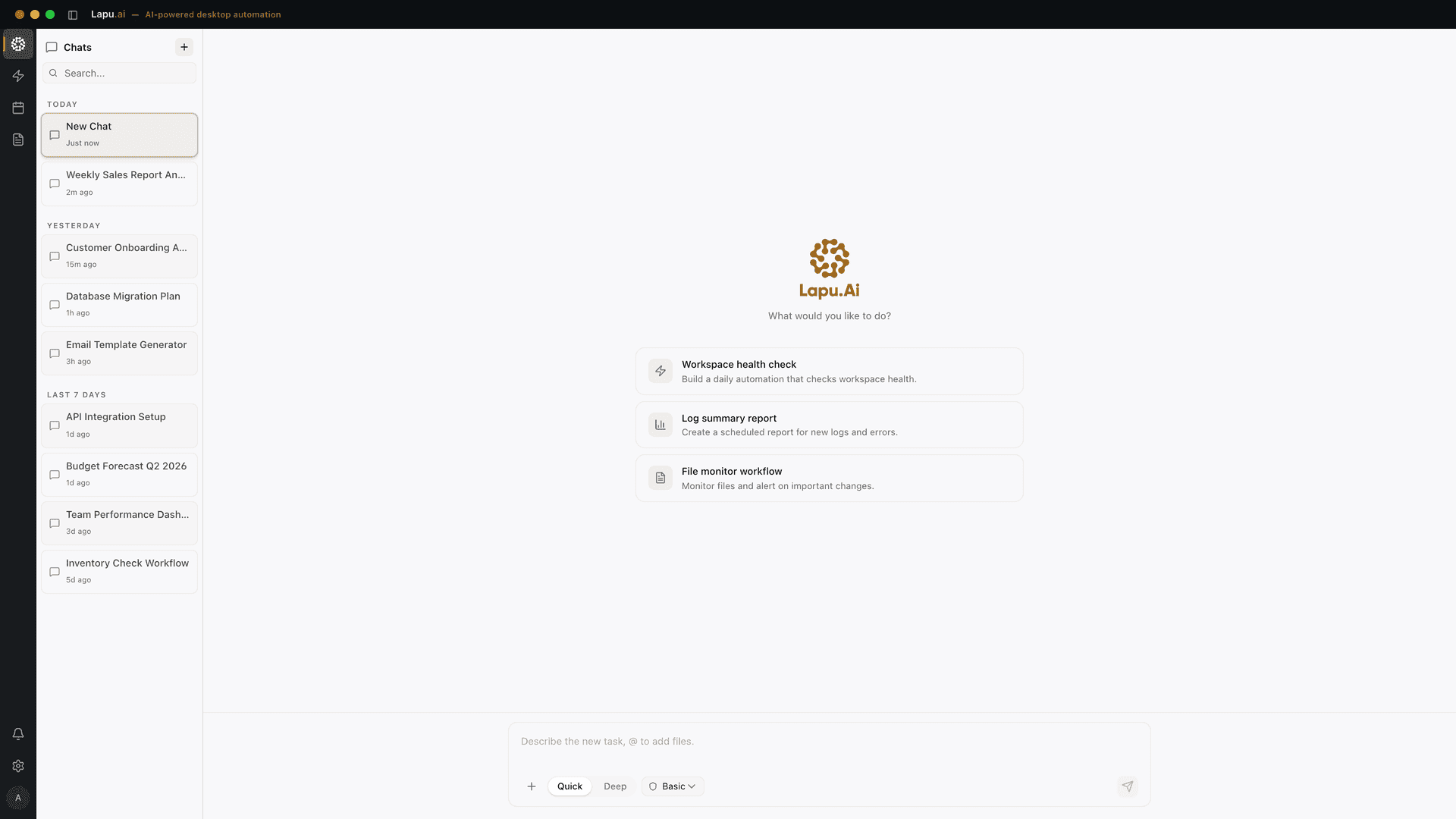
Automate the work between you and outcomes
Lapu AI handles the repetitive work between you and outcomes. One desktop agent, zero tab-switching. Available now on macOS and Windows.
- 1-click uninstall
- Cancel anytime
- Files never leave your computer
Free to start. Cancel in 1 click. Files stay on your machine.