
Desktop AI Agent for Operations Teams
Operations teams keep the rest of the company running. The flip side is that ops work is full of repetitive workflows — onboarding scripts, vendor exports, status reports, periodic audits. A desktop AI agent can absorb the long tail without sacrificing oversight.
Reviewed
- 1-click uninstall
- Cancel anytime
- Files never leave your computer
Highlights
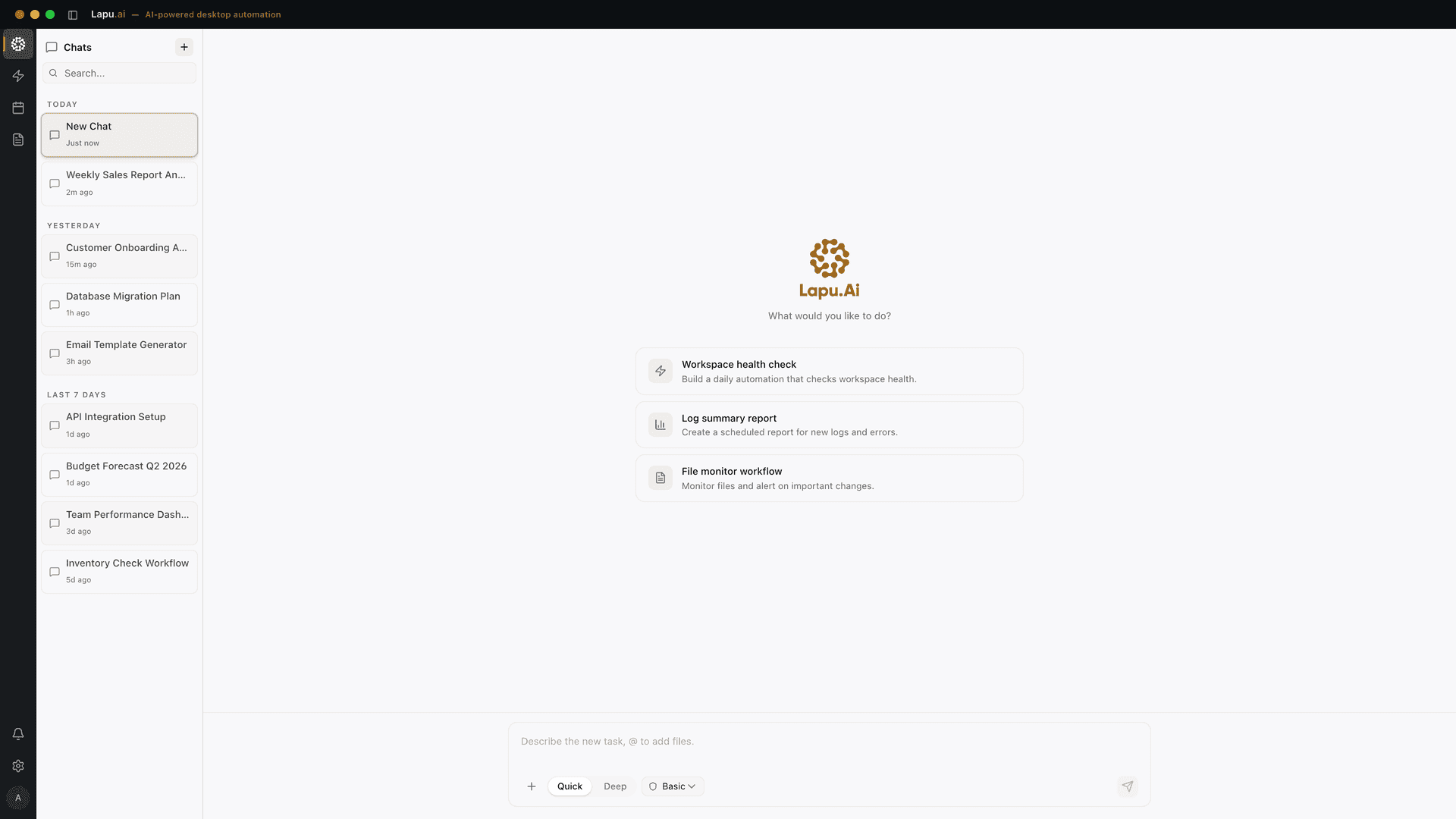
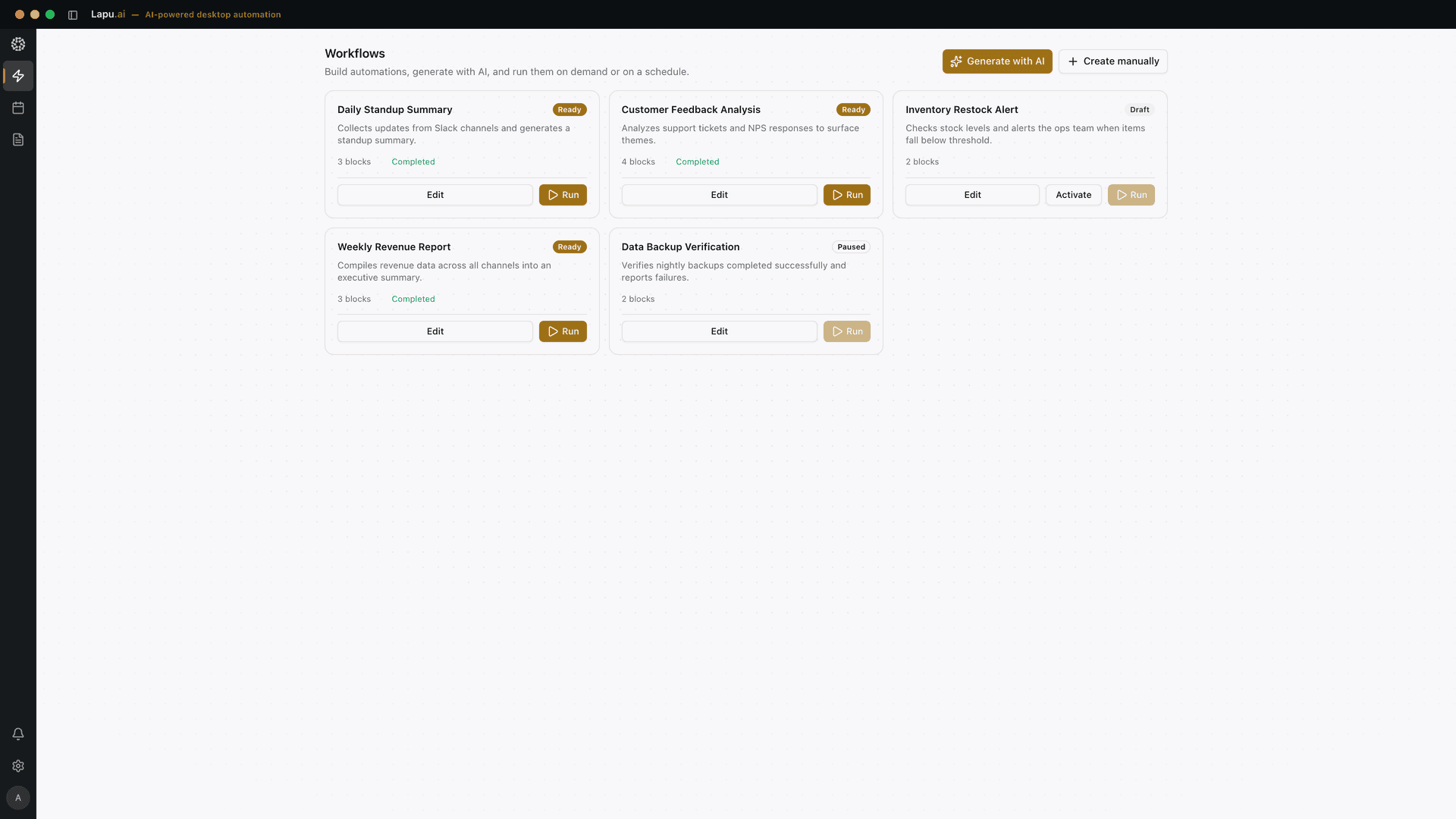
Reusable skills
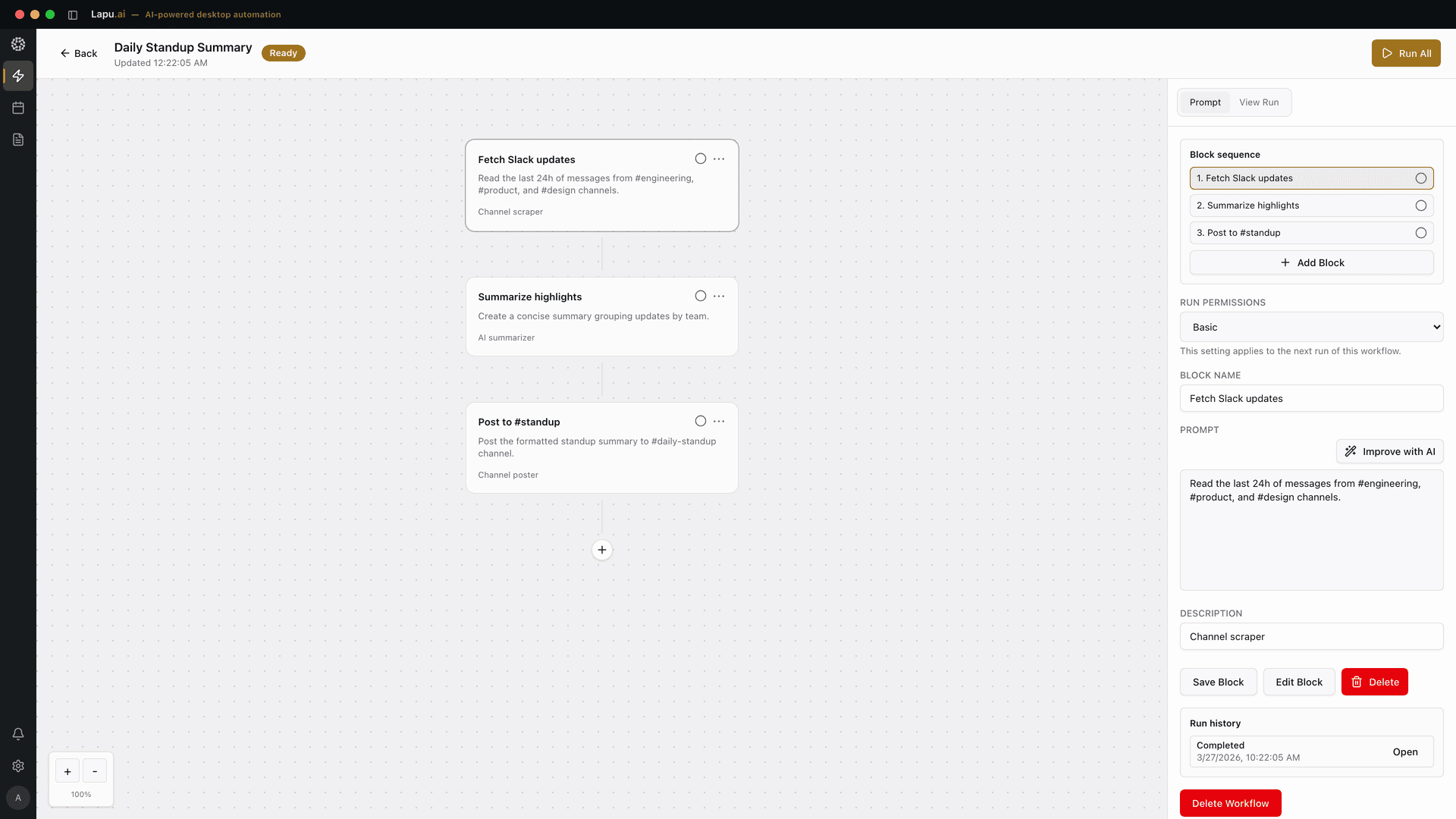
Package workflows as skills the team can reuse: an onboarding flow, a weekly export, a vendor sync. Skills live with your account and can be edited like documents.
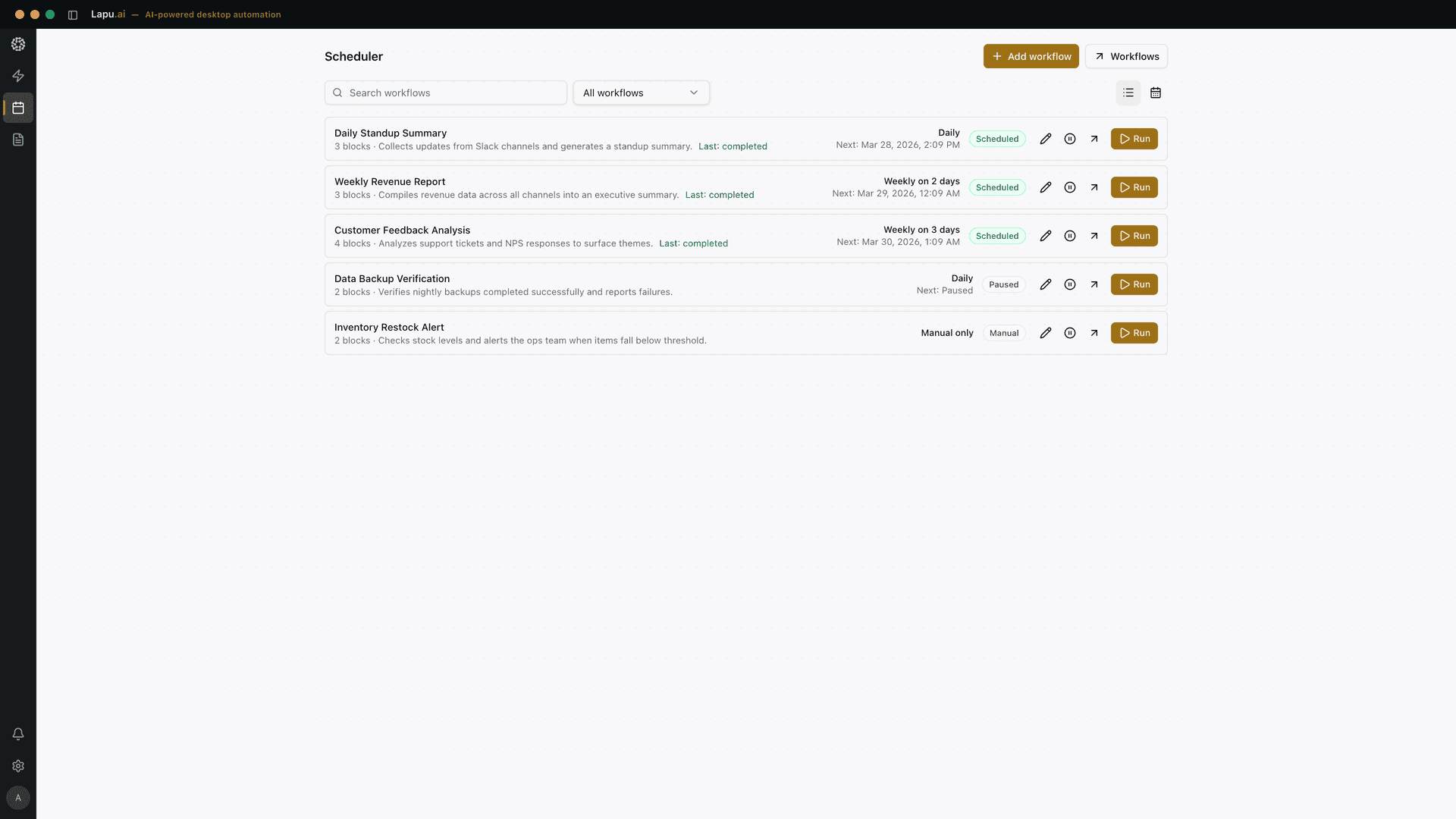
Scheduled automation
Run skills on a schedule and the agent works while you do not. When a step needs approval, you get a notification.
Cross-application execution
A single skill can pull data from a CSV, push it to a CRM through accessibility APIs, log the result to a tracker, and post a Slack update — all from one machine.
Audit trail
Every tool invocation, file write, and command is logged in the agent's activity view. Permissioned execution and visible logs keep ops accountable.
Where ops teams use it
Common ops use cases include weekly reporting (pull data from multiple sources, format, send), vendor onboarding (gather paperwork, fill internal forms, notify stakeholders), employee provisioning (create accounts, assign licenses, send the welcome packet), and audit support (collect evidence files, generate the deck, log handoff). Lapu AI does the work, the team approves the steps that matter.
Why this beats RPA
Traditional robotic process automation depends on brittle screen scraping that breaks when a UI changes. Lapu AI uses native accessibility APIs and reasons about each step using frontier AI — so when an interface shifts, it adapts rather than failing. It is also dramatically faster to set up: describe the workflow once, refine over a few runs, then save it as a skill.
Try Lapu AI for free
Free tier with no credit card. macOS and Windows — see the app before you install.
- 1-click uninstall
- Cancel anytime
- Files never leave your computer
Frequently asked questions
- Can multiple people share a skill?
- Skills are tied to your account. On Teams plans they can be shared within the team. Enterprise deployment options for centrally managed skills are available on request.
- What happens when a workflow needs approval mid-run?
- The agent pauses and surfaces a notification. You see what is about to happen, approve or deny, and the workflow continues.
- Does it work with line-of-business apps?
- Yes — any desktop application that exposes accessibility APIs, including most native and Electron apps. The agent reads the UI tree, identifies interactive elements, and drives them with your approval.
- How does it handle credentials?
- Lapu AI does not store credentials. For app login, the agent operates whichever session your OS keychain or browser keeps. For API calls, the agent uses tools you explicitly grant access to.
- Can we deploy it across the team?
- Yes. Teams plans include shared usage pools and unlimited seats. Enterprise plans add SSO/SAML and custom deployment options.
Related
Desktop AI Agent for Developers
A desktop AI agent for developers. Lapu AI runs locally with shell, grep, file edit, and desktop automation on macOS and Windows.
AI Agent That Runs Terminal Commands
An AI agent that runs terminal commands on your machine — bash, zsh, PowerShell. Lapu AI captures stdout/stderr and gates execution behind per-action approvals.
How to Choose the Best Desktop AI Agent
How to choose the best desktop AI agent in 2026. A decision framework covering local execution, permissions, model access, platform support, and pricing.
Pricing
Use cases
Automate the work between you and outcomes
Lapu AI handles the repetitive work between you and outcomes. One desktop agent, zero tab-switching. Available now on macOS and Windows.
- 1-click uninstall
- Cancel anytime
- Files never leave your computer
Free to start. Cancel in 1 click. Files stay on your machine.