
Desktop AI Agent for Writers and Researchers
Writing and research happen in files: drafts, notes, PDFs, snippets. A desktop AI agent that operates on those files directly — instead of asking you to paste text into a chat — fits how the work actually happens.
Reviewed
- 1-click uninstall
- Cancel anytime
- Files never leave your computer
Highlights
Read your sources
The agent reads your local notes, PDFs, and drafts. It cites the document it pulled material from rather than fabricating from memory.
Organize the archive
Sort, rename, and label documents based on content. The agent can de-duplicate similar drafts or restructure a notes folder by topic.
Long-form drafting
Draft based on your existing material rather than a blank page. The agent keeps voice and structure consistent with the source files.
Permission before changes
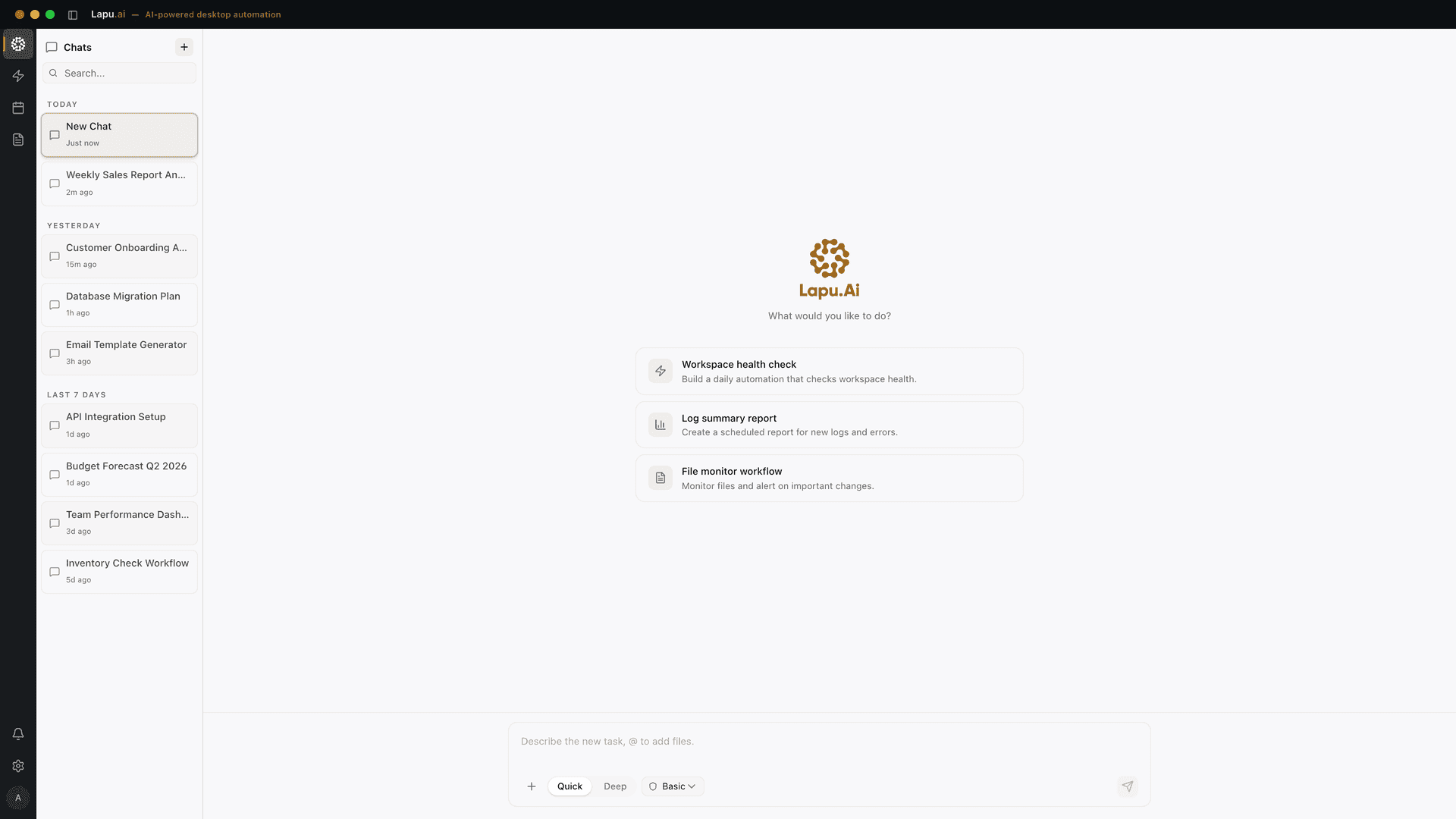
Every file write — moving, renaming, editing — pauses for your approval. You see the change before it happens.
What this looks like in practice
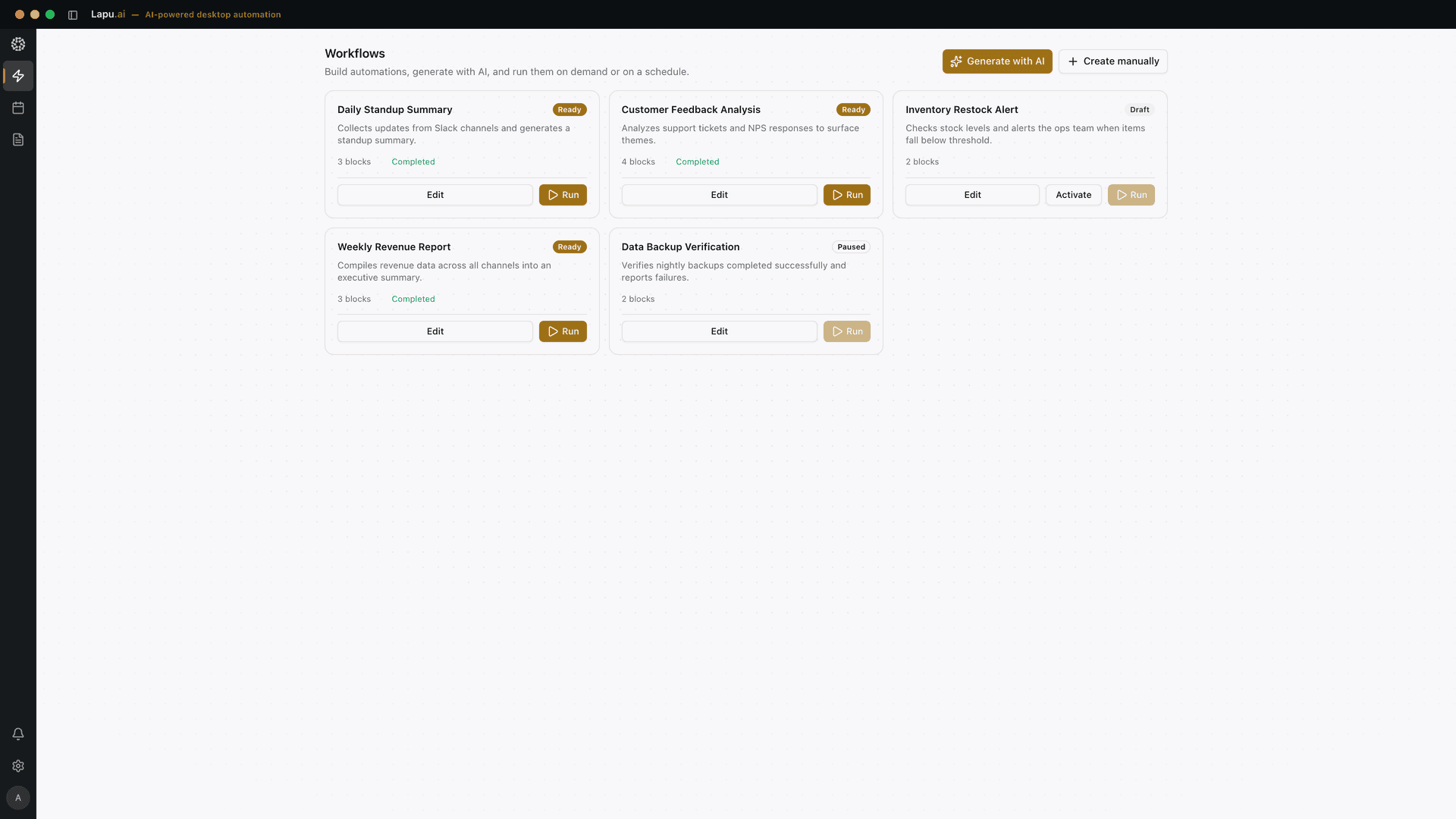
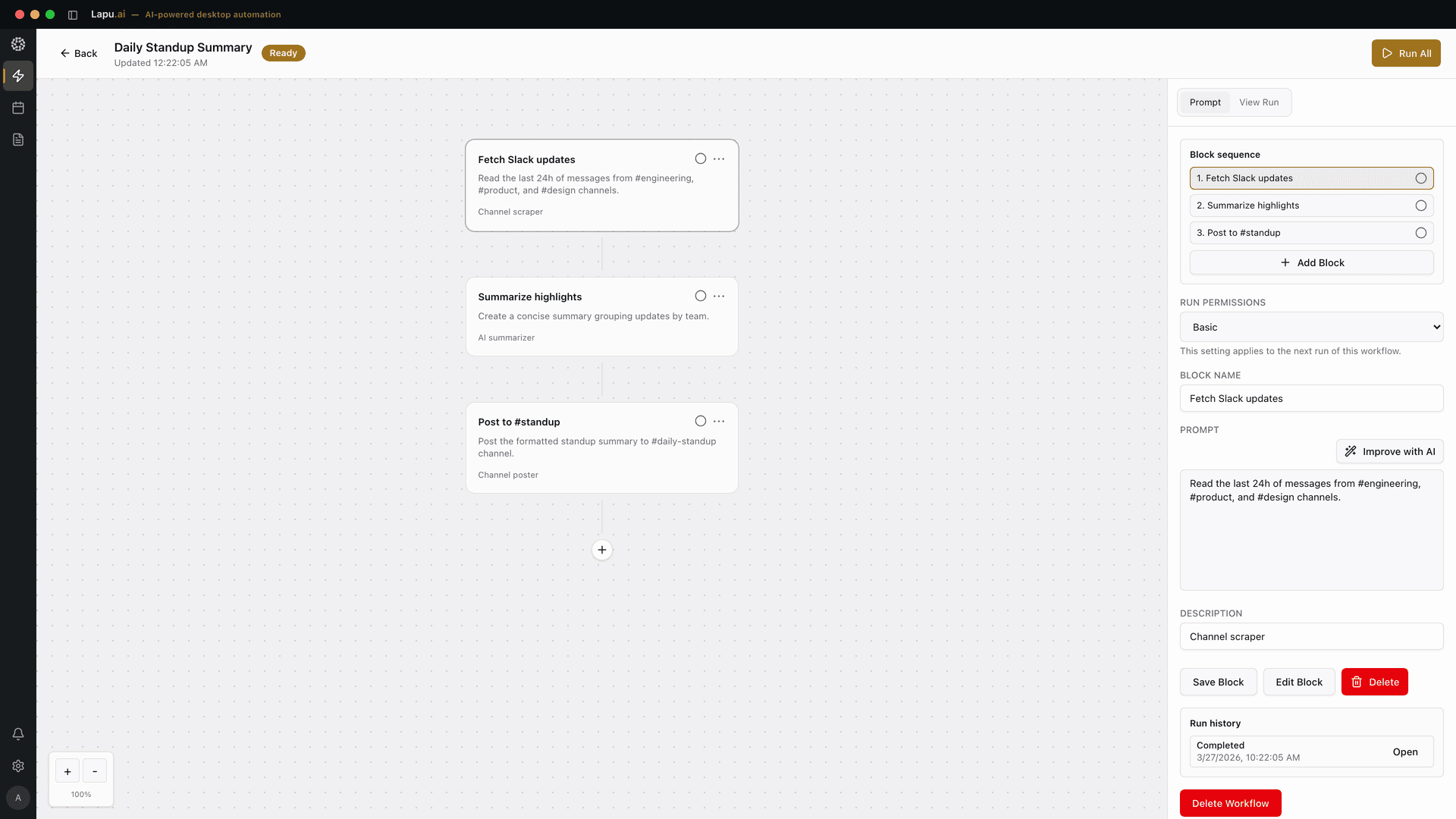
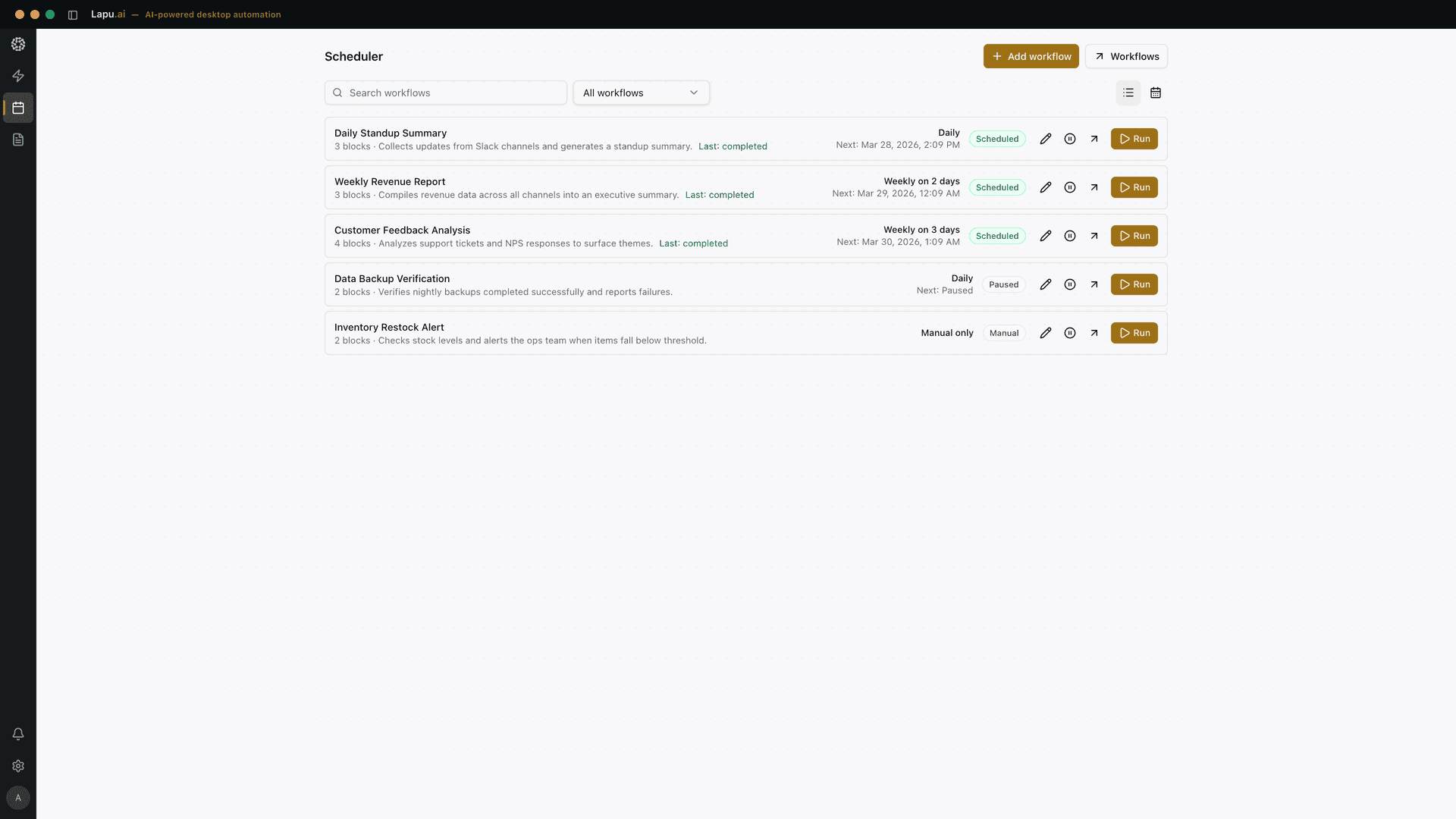
A research workflow might start by pointing the agent at a folder of PDFs and asking for a synthesis with citations. A drafting workflow might ask the agent to outline a chapter based on existing notes, then draft section by section. An archive workflow might say: "Sort the loose drafts in ~/Desktop/Drafts into the right project folders." Lapu AI handles all three with local file access and permission gates.
Why local-first matters for writers
Drafts and unpublished material are sensitive by nature. A local-first agent processes files on your machine and only sends the immediate reasoning context to the model. There is no cloud workspace storing your manuscript, and the audit trail of what the agent did stays in the desktop app rather than someone else's logs.
Try Lapu AI for free
Free tier with no credit card. macOS and Windows — see the app before you install.
- 1-click uninstall
- Cancel anytime
- Files never leave your computer
Frequently asked questions
- Can the agent read PDFs?
- Yes. Lapu AI's file tools handle PDFs and most common document formats. Very large documents are processed in slices rather than streamed entirely to the model.
- Will the agent change my drafts without asking?
- No. File writes — including edits, renames, and moves — require explicit user approval. The agent shows what it plans to do before acting.
- Does it integrate with Scrivener or Obsidian?
- Lapu AI works with the underlying files those apps use rather than embedding inside them. Markdown notes, draft documents, and project folders are all readable by the agent's file tools.
- Can it cite the source it used?
- Yes. Because the agent reads local files directly, it can cite the document path it pulled material from. This is materially different from a model hallucinating from memory.
- Is my unpublished work sent to the model?
- Only the immediate context for a single agent step is sent to the integrated model endpoint via Lapu AI infrastructure. Files stay on your machine — there is no Lapu AI cloud workspace.
Related
AI Agent That Reads and Edits Files
An AI agent that reads, edits, and writes files on macOS and Windows. Lapu AI ships local file tools with per-action approvals and an audit trail.
Local Desktop AI Agent
A local-first desktop AI agent for macOS and Windows. Your files stay on your machine; Lapu AI uses permission-based local tools with frontier AI.
Desktop AI Agent for Data Analysts
A desktop AI agent for data analysts. Process CSVs, run scripts, and automate spreadsheet workflows on macOS or Windows — files stay local.
Use cases
Automate the work between you and outcomes
Lapu AI handles the repetitive work between you and outcomes. One desktop agent, zero tab-switching. Available now on macOS and Windows.
- 1-click uninstall
- Cancel anytime
- Files never leave your computer
Free to start. Cancel in 1 click. Files stay on your machine.